Showing posts with label The Gibson Family. Show all posts

Tuesday, September 10, 2024

Mary Ethel Gibson: An Emblem of Boston's Victorian Era

The research for this blog post was conducted in preparation for an interview with the What’s Her Name podcast in 2023. To learn more fascinating details about Ethel’s life, listen to their episode, “The Boston Brahmin.”

Ethel and husband Freeman Allen, c.1925
Gibson House Museum
Mary Ethel Gibson, born in 1873—and more often referred to as Ethel by friends and family—was brought into a world on the precipice of great change. Over the course of the first few decades of her life the telephone was invented, as was the automobile and kodak camera; electricity made its way into homes; and even the first airplane took flight. The city of Boston itself was also changing, as waves of immigration created a massive population boom, which not only encouraged the city to create the Back Bay neighborhood that Ethel would spend her entire life in, but also created new social pressures that sparked various progressive movements. At the Gibson House, as we have begun to uncover more details about Ethel’s life, we can see the ways in which she navigated these changes, both by holding on to the traditions she grew up with and by taking advantage of the newfound freedoms afforded to her in the 20th century. Ethel’s community and her status in society informed and shaped her life during such rapidly changing times. In many ways, Ethel and her experiences during the 19th and 20th centuries are emblematic of Boston’s Victorian era, but she was also an individual who made individual choices. No one person’s story is enough to understand any period of history, but knowing more about Ethel and her life not only expands our understanding of the Gibson House and the Gibson family, but also the greater world they occupied.

Friday, August 25, 2023

Summering in Nahant

There were two social seasons in the elite Bostonian’s calendar: the winter season in Boston, which began in mid-November and lasted until the beginning of Lent; and the summer season, which ran from about May through September. In the summer season, the wealthy decamped for their summer homes on the coast and in the mountains. One of the most popular spots was Nahant, an island community about an hour north of Boston.

The Gibson family owned a summer home on Nahant called “Forty Steps,” named after the beach that the house overlooks. Catherine Gibson inherited the home from her father, Samuel Hammond, in the 1850s, and continued to summer there for most of her life. 
Forty Steps, Nahant (Gibson House Museum)


Wednesday, September 23, 2020

Power in Suffrage

This blog post is part of a series about the Gibson family and the lead-up to the 1920 presidential election, which promised "a return to normalcy" after many years of social upheaval. Read about Boston's experience of World War I here and Boston during the flu epidemic of 1918 here.

The first two decades of the early twentieth century saw huge social movements in the United States, most notably the suffrage movement. Women had been fighting for their right to vote for many years, but the movement gained more traction in the 1910s. Women across the country marched, protested, and rallied for suffrage. An anti-suffrage movement also existed, largely driven by white, upper-class women. These women, although still second-class citizens in the United States, possessed a degree of relative privilege due to their race and class. The Gibsons belonged to this group, and the Gibson women used their position to advocate against women’s suffrage. 

Mary Ethel, the oldest Gibson daughter, was an anti-suffragist. In 1914, she and many other Back Bay women sold red roses to the public just ahead of a suffrage parade. As red was the color of anti-suffrage, the women intended for the thousands of roses to make a “dignified protest” against the suffragists in Boston. She protested alongside other women from her social circle during this event. Mary Ethel may have also participated in other anti-suffrage events in Boston; her sister and mother may have felt similarly about the cause.

Boston Globe, October 17, 1915.

The upper-class culture of Beacon Street led to its becoming a center of anti-suffrage in Boston. In fact, suffragists in Boston called the street “enemy’s country” because of its large anti-suffragist population. These privileged women could not take part in governmental politics, but were able to be involved in and influence the social politics of their upper-class culture through their connections. 

Tuesday, September 22, 2020

Epidemic in the City

This blog post is part of a series about the Gibson family and the lead-up to the 1920 presidential election, which promised "a return to normalcy" after many years of social upheaval. Read about Boston's experience of World War I here and the Gibsons and suffrage here.

In the spring of 1918, in the midst of World War I, an influenza virus called Spanish Flu (or “Grippe”) because it was believed to have originated in Spain, spread through the United States. A lethal second wave began that summer in Boston. Much like the waves of the COVID-19 pandemic we are currently experiencing, the influenza of 1918 turned daily life upside down. 

Influenza cropped up in Boston in late August of 1918 at Commonwealth Pier, where sailors trained before going overseas. Like the rest of the country, Boston was fully immersed in wartime efforts. Over 100,000 male Bostonians between the ages of eighteen and forty-five registered to be drafted in early September. The federal government’s Liberty Bond campaign to offset the cost of war was in full swing, with Boston expected to raise 129 million dollars through the sale of bonds at Liberty Loan parades and drives. 

Boston Globe, September 2, 1918.
A “Win-the-War-for-Freedom” Labor Day parade held on September 2, 1918, consisted of 4,000 people; civilians, soldiers, and sailors from Commonwealth Pier mingled, spreading the virus among Boston residents. The parade wound around Boston Common, quite close to the Gibson family home at 137 Beacon Street. 


Charlie Gibson, Boston, and the War in Europe

This blog post is part of a series about the Gibson family and the lead-up to the 1920 presidential election, which promised "a return to normalcy" after many years of social upheaval. Read about the Gibsons and suffrage here and Boston during the flu epidemic of 1918 here.

Charlie Gibson, a Citizen Soldier: The Plattsburg Movement and the First World War 

On May 7, 1915, a German submarine torpedoed and sank the HMS Lusitania, a British cruise liner traveling from New York City to Liverpool, England. Almost twelve hundred people died in the attack, including 123 Americans. 


Gibson House Museum
For almost two more years, President Woodrow Wilson maintained official neutrality and a policy of American isolation. Others in the United States believed that American entry into the conflict was inevitable and joined the Preparedness Movement, an effort to ready American troops for war. Led by individuals such as former president Theodore Roosevelt and General Leonard Wood, the Preparedness Movement gained much of its membership from upper- and middle-class Americans in the Northeast. 

Wednesday, July 22, 2020

Part 2: Two Gentlemen in Touraine: A Pilgrimage to Fairyland

This post is the second of a three-part series on the life and writings of Charles Hammond Gibson, Jr., founder of the Gibson House Museum. You can read the first part here. 

Let us then take a sweeping glance around, for we may not have another half so grand, half so fair, or half so high, while we are in the old Touraine which lies before us, there in the last orange glow of the departed sun. And if we follow these avenues of the roof below us, if we wind our way around these great towers, around the high and pointed roofs of slate, we may well imagine ourselves in some fairyland. This maze of cupolas, of domes, of towers, appears more bewildering to us than ever. And we lean against the stone, in an artistic intoxication, so overpowering is it.


—Charles Hammond Gibson, Jr., Two Gentlemen in Touraine (1899)


In 1899, when Charles Hammond Gibson, Jr. (“Charlie”) published Two Gentlemen in Touraine, a lighthearted but sophisticated book about the historic and picturesque French royal chateaux of Touraine, he was just twenty-four years old. A young Bostonian educated at elite New England prep schools, he also briefly attended the Massachusetts Institute of Technology, where he became captivated by French history and architecture. Charlie had talent, a refined sensibility, and an entrepreneurial spirit. His family, part of the last wave of Boston’s Brahmin elite, wanted him to become an engineer of some kind and so sent him off to MIT, then called Boston Tech and located, like his family’s fashionable brownstone residence, in the Back Bay. Charlie would later recall that he resisted such a utilitarian path. “I wanted only to create beauty, and, through my verse and my garden, I think I’ve done that.”

In the twilight of the Brahmin era, estates and inherited wealth were divided and subdivided; young men had to pursue careers and establish themselves, socially and financially. And so Charlie’s decision to become a traveling bachelor-poet created tension at home, especially with his father, Charles Gibson, Sr. Although mitigated by a close and loving relationship with his mother, Rosamond Warren Gibson, this tension would come to define his life in significant ways. A similar pattern of intra-familial conflict would play out with other gay men of Charlie’s generation, and beyond, in legal struggles over inheritance and, in some cases, disinheritance.

Manuscript copy of the first chapter of Two Gentlemen in Touraine.
Collection of the Gibson House Museum


Thursday, March 5, 2020

On the Occasion of the 250th Anniversary of the Boston Massacre


On March 5, 1770, a riot broke out on King Street (now State Street) in front of the Custom House in Boston. Soldiers fired into the crowd and killed five civilians. This dramatic event came on the heels of weeks of upset between colonists and British soldiers occupying the town. Its reverberations would be felt all the way through the American Revolution.

Red Study at the Gibson House Museum.
A copy of the famous print of the Boston Massacre, as the event would come to be known, hangs in the red study at the Gibson House. You might know the one I’m talking about. It shows a line of soldiers, in red coats with muskets, firing into a crowd. Three men in the foreground are seen shot and dying on the street. (This particular copy does not include Crispus Attucks, an African-American man born into slavery, and a well-known victim of the Massacre.) Well-dressed colonists look on in horror.

Paul Revere produced this illustration just three weeks after the event, titling it “The Bloody Massacre Perpetrated in King Street, Boston.” (He appears to have copied the image from the work of fellow printer, Henry Pelham, whose similar depiction was published around the same time.) The print became a famous, and important, piece of propaganda. It did much to inflame colonial sentiments against the British, even as it depicted an inaccurate portrayal of the actual event.

Why is there a copy at the Gibson House? This particular print was produced for the 1876 Centennial (purportedly on original plates from the archives of the Massachusetts Historical Society). It was first owned by Charlie Gibson’s uncle, Dr. John Collins Warren; Warren gave it to Charlie in 1904.

Wednesday, August 14, 2019

Faking the Family Tree


Dining room at the Gibson House.
A family crest hangs over the dining room fireplace at the Gibson House. The vivid red and gold shield on a bright black background is eye-catching. Dinner guests would be unlikely to miss its not-so-subtle implications about the importance of the family lineage. In a scroll along the bottom, the motto reads “In the name of Gibson.” 

The tradition of coats of arms (of which the crest is the top part) dates to the medieval period in Europe, where knights would carry shields with specific designs. The design elements were intended to convey the achievements of the person who carried the coat of arms. Later, families would take a coat of arms as the family logo.  Typically, only noble families were permitted to do this and so the coat of arms came to be associated with the aristocracy. 


Friday, January 4, 2019

Matching Sailor Suits for the Gibson Cousins

Henry Freeman Allen, c.1918
Gibson House Museum (2006.18.20)

Until the end of the nineteenth century, most American children were dressed like miniature adults. Prior to age three, boys and girls alike wore “dresses,” or long shifts that were simple to get on and off and easy to launder. At about three or four, girls began wearing more elaborate dresses, like their mothers, and boys were “breeched,” or put into pants, like their fathers. 


Beginning in the 1860s and 1870s, however, specific clothing for children became popular. And one of the most popular, and enduring, outfits for young boys was the sailor suit. Queen Victoria dressed the Prince of Wales, Edward VII, in a custom-made sailor suit in 1846, modeled on a real Royal Navy uniform. The prince’s portrait was painted in this outfit and it set off a craze for sailor suits that would last into the twentieth century. 

Wednesday, November 7, 2018

A Century of Easton Living


This blog post is part of an occasional series about Gibson family relatives. Family trees are rife with personalities: the mysterious aunt, the curmudgeonly great-uncle, the adventurous second cousin. Join us as we explore some of these colorful characters and learn more about the interconnected nature of Boston high society in the process.

On September 2, 2018, Elizabeth Motley Ames died at the age of 99. She had lived just shy of an entire century in Boston and Easton, Massachusetts.  A great-niece of Rosamond Warren Gibson’s, she was a passionate preservationist and a longtime supporter of community causes in Easton.

Eleanor Warren (left) and Rosamond Warren (right),
circa 1870.
Gibson House Museum (1992.406.1).
The Motley family lived nearby to the Gibsons in Back Bay. Sisters Rosamond and Eleanor Warren were quite close growing up, born only a year apart; they remained so after they were married. Family lore has it that when the Motley kids walked past 137 Beacon Street, on their way to or from the Public Garden, they’d better not be misbehaving or great-aunt Rosamond would be sure to tell grandmother Eleanor about it straight away. Boston’s Back Bay was a tight-knit community into the early twentieth century.

As a young woman, Elizabeth Motley married into a prominent Easton family. Oliver Ames (1779–1863) founded a shovel factory in Easton, Mass. which would go on to become a world-class operation, involved in many key construction events in American history. The Ames family also included several politicians over the years, most notably Oliver Ames (1831–1895) who served as governor of Massachusetts in the late nineteenth century.


Wednesday, August 2, 2017

A Study in Contrasts: Renaissance Revival and Aesthetic Design under One Roof


Part of why the Gibson House Museum serves as such an integral part of Boston’s historical landscape is its ability to capture, under one roof, the shifts in decorative and sociopolitical trends in the nineteenth and twentieth centuries. Upon visiting the museum, you will likely notice a distinct change in decorative moods depending on which room you are in. The entrance hall, for example, is primarily decorated in the 1860s Renaissance Revival style that would have been popular in Gibson matriarch Catherine Hammond Gibson’s time. The console table and matching mirror to your left as you walk into the museum are both carved in ebonized black walnut, which would have been an expensive and highly desirable material. Placed in the first room the Gibsons’ guests would see, this Renaissance Revival furniture would have showcased the family’s knowledge of, and appreciation for, an older, revered age of artistic innovation and achievement.

Thursday, December 8, 2016

The Forgotten Midnight Rider

William Dawes
Paul Revere Statue, Boston
 
One of the many connections the Gibson family has to Boston history is its link to William Dawes (1745–1799), uncle to Catherine Hammond Gibson (1804–1888), builder of the Gibson house. William Dawes, the half-brother of Catherine’s mother, Sarah Dawes Hammond (1768–1859), was the Boston Patriot who rode alongside Paul Revere on his famous midnight ride of April 18, 1775. While Paul Revere has been commemorated in Longfellow's famous poem and by a bronze statue in front of Boston's Old North Church, William Dawes has not been so honored. In an attempt to remedy this, Helen F. Moore published a poem in 1896, one verse of which reads:
'T'is all very well for the children to hear
Of the midnight ride of Paul Revere;
But why should my name be quite forgot,
Who rode as boldly and well, God wot?
Why should I ask? The reason is clear —
My name was Dawes and his Revere.

Tuesday, September 6, 2016

The Gibson Ladies and the Vincent Club


A century ago, most Bostonian women of a certain social standing participated in any one of the numerous, yet highly exclusive, women’s clubs in the city. Exclusivity characterized the nature of the clubs, but the majority actually focused their energy on various types of charity work—a noblesse oblige approach to social groups.

The Vincent Club was one such philanthropic organization. Founded in 1892, the club originated to support the Vincent Memorial Hospital, established one year earlier in the memory of Mary Ann Vincent, a magnanimous Boston actress. The Vincent Memorial Hospital, originally located in the West End, filled a niche in Boston; the hospital’s medical staff cared primarily for wage-earning, indigent women.

Vincent Club fundraising techniques exceeded the common luncheon. The club’s annual fundraising show—a vaudeville performance inspired by Mary Ann Vincent’s theatrical career and featuring the “Vincent Ladies”—arrived on the social scene every year beginning in 1893 to great anticipation. The “Vincent Show” typically took the form of a topical satire, featuring Boston’s finest young women performing a multitude of acts. Themes ranged from the inaugural “Breaking the Ice” show to the 1959 musical depicting life on an “interplanetary space platform.” The show also served as a light-hearted debutante ball, in which young women made their “stage debut as singers and dancers.”

Unlike a traditional debutante ball, however, there was a strict ladies-only rule on stage and in the audience. In 1899, the Boston Daily Globe published its annual Vincent Show preview feature, stating, “It was distinctly stated and printed on the tickets that no gentlemen would be admitted…. [T]hose who appeared in the leading roles had the supreme confidence of appearing before a friendly audience and were as much at ease as if entertaining in their own drawing rooms.”

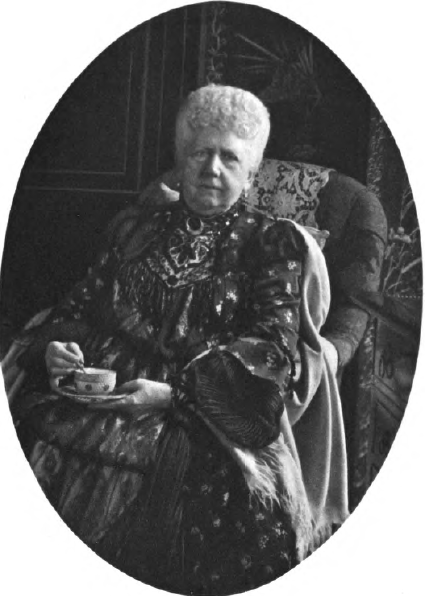
Mary Ethel Gibson (1873–1938), referred to in the Boston Daily Globe as having “always been popular in society,” was a founding member of the Vincent Club along with her mother, Rosamond Warren Gibson (1846–1934). Rosamond planned and directed the first theatrical performance, while Mary Ethel performed in that 1893 show, starring as a man named Lord Adonis Fickleton.

In 1941, the Vincent Memorial Hospital merged with Massachusetts General Hospital, providing gynecology services while maintaining its own identity. When the Vincent let its independent hospital license expire in 1988, MGH agreed to keep the VMH’s name associated with its former programs. 

The Vincent Club is still extant, with a current membership of 1,200 women. A fancy spring gala has since replaced the Vincent Show as the main fundraising event. Male attendees are welcome at the gala, as the “no men allowed” rule was rescinded in 1920.

By Maddie Webster, museum guide and intern


Sources
“Boston's Vincent Club: Elite and Thriving.” New York Times (1923–Current File), Feb. 20, 1971. http://proxy.bc.edu/login?url=http://search.proquest.com.proxy.bc.edu/docview/119389407?accountid=9673.

Laura Haddock, “Traditional Vincent Club Drill to Renew Memories of Show’s Women’s Activities.” The Christian Science Monitor (1908–Current File), Feb. 28, 1947. http://proxy.bc.edu/login?url=http://search.proquest.com.proxy.bc.edu/docview/515991751?accountid=9673.

“History,” Vincent Memorial Hospital, http://vincentmemorialhospital.org/history/.

“Mary Gibson a July Bride.” Boston Daily Globe (1872–1922), Jul. 21, 1911. http://proxy.bc.edu/login?url=http://search.proquest.com.proxy.bc.edu/docview/501764479?accountid=9673.

“Society Women in a Vaudeville Show.” Boston Daily Globe (1872–1922), Apr. 28, 1899. http://proxy.bc.edu/login?url=http://search.proquest.com.proxy.bc.edu/docview/499054147?accountid=9673.

“Vincent Club Headliners Through.” Boston Daily Globe (1928–1960), Mar. 22, 1959. http://proxy.bc.edu/login?url=http://search.proquest.com.proxy.bc.edu/docview/250878367?accountid=9673.

“Vincent Club Revue Promises Gala Opening.” Boston Daily Globe (1928–1960), Mar. 8, 1936. http://proxy.bc.edu/login?url=http://search.proquest.com.proxy.bc.edu/docview/815157287?accountid=9673.

Gail Wetherby, e-mail message to the author, August 12, 2016.


Friday, May 6, 2016

Dr. John Collins Warren and His Use of Ether as Anesthetic

Dr. John Collins Warren, circa 1850

When giving tours of the Gibson House, I always share details of Rosamond Warren Gibson’s (1846–1934) family background, noting that within her family were a number of prominent doctors. Among them were her own father, Jonathan Mason Warren; her great-granduncle, Major General Joseph Warren, who was killed in action at the Battle of Bunker Hill; and her paternal grandfather, John Collins Warren.

Dr. John Collins Warren is particularly noteworthy because he is credited with performing the earliest recorded operation using ether as a general anesthetic, in 1846. And, fortunately, he wrote an account of this experiment only a year after the procedure, which was published in 1848.

Tuesday, March 1, 2016

A Brief Sketch of the Life of Annie Crowninshield Warren

Annie Crowninshield Warren, age 88


We have shared stories from Rosamond Warren Gibson’s Recollections of My Life for My Children, including an 1864 trip to New Orleans during the Civil War. But I was recently excited to learn that Rosamond’s mother, Annie Crowninshield Warren, wrote a similar work for her own children entitled Reminiscences of My Life.

Since I don’t have much of an opportunity to talk about Rosamond’s mother on tours at the Gibson House, I figured I would share a brief biographical sketch of Annie’s life on our blog, drawing upon her Reminiscences.

Tuesday, February 2, 2016

Taking the Prize: The Privateer Ship America


Before Rosamond Warren Gibson’s grandfather Benjamin Crowninshield (1772–1851) became Secretary of the United States Navy (1815–1818), he and his brother George, like himself a Salem, Mass. merchant, offered three vessels to the US government for service as privateers during the War of 1812. These were the ship John, the sloop Jefferson, and the ship America. The family’s foray into privateering had begun much earlier, however. The earliest reference to a Crowninshield privateer that I could find was another ship called America, which served in the Quasi War with France (1798–1800). Additionally, in the American Revolution, Salem, Mass., sent out 458 privateers, and it is possible Crowninshield vessels were among that number.

Of these, the America of the War of 1812 is the most famous.

In Recollections of My Life for My Children, Rosamond Gibson mentions the America. She relates a family story that during the War of 1812 the vessel captured an English merchant ship bound for India and seized the cargo aboard, which included goods owned by an English family. Found among these personal possessions was a miniature dining room table for a child’s dollhouse. Years later, a young Rosamond added this piece of toy furniture to her own dollhouse. (See “The Warren Dollhouse,” January 1, 2016.)

Benjamin Williams Crowninshield. Portrait by U.D. Tenney.

Having always had a fascination with ships and the history of wars, I wanted to research the America and its career as a privateer. I also wanted to try and corroborate Rosamond’s story about the English ship sailing for India before its interception by the America. While the evidence does not support the story that America captured a ship on its way to India, some of the prizes it took did find their way into the hands of various Crowninshield family members, meaning the young Rosamond may well have played with toys meant for English children some forty years earlier.

Built in 1803, the America originally went out to sea as a merchant ship and spanned a length of 114 feet, was 30 feet wide, and had two decks. But in 1812, when she was commissioned as a privateer, her dimensions were reduced to make her speedier and more maneuverable to better suit her new purpose. Now 108 feet long and with her upper deck removed, she averaged a top speed of 13 or 14 knots, which she could maintain for several hours at a time. With this new speed and agility, the America outpaced enemy ships with relative ease, avoiding capture on several occasions.

As a privateer, the America was authorized by the United States Navy to prey on English commercial vessels, taking them and their cargo as prizes. Operating mainly in the North Atlantic, the America captured forty-seven vessels, twenty-seven of which were sent back to the United States. These twenty-seven ships and their cargoes together were valued at $1.1 million. The other vessels were either recaptured by the British Royal Navy or destroyed at sea.

This kind of warfare proved vital to the American naval effort. When war broke out in 1812, the US Navy was grossly underprepared, with only about a dozen operational vessels. The Royal Navy, however, had about 110 warships, 4 fifty-gun ships, and 134 frigates. To compensate for this clear disadvantage, the United States put about 500 private ships into service as privateers.


Encounters between US privateers and British ships inevitably led to violent exchanges of cannon fire in naval battles. And the America found herself in such a situation on at least one occasion, when she engaged the Princess Elizabeth, a private armed ship, in an intense firefight that lasted a little over an hour. This ended in the British ship’s surrender with two fatalities. The Americans came out with no loss of life and minimal damage to their ship.

Unfortunately, the ending to America’s story is not so glorious. After the war, she spent the next fifteen years docked before being auctioned off in 1831, when she was destroyed and stripped for metal.


By Timothy Spezia, museum docent

Image Sources:
Ship America, 1806: from Old Time Ships of Salem, 33.
Benjamin W. Crowninshield portrait: Benjamin W. Crowninshield wikipedia entry. Naval History and Heritage Command identified the artist, U.D. Tenney, a portrait painter of the 19th century.
America in Chase of the Princess Elizabeth: from An Account of the Armed Ship "America" of Salem, 44. 
 
Sources:
Carl Benn, Essential Histories: The War of 1812 (New York: Osprey Publishing, Ltd, 2002).
Bowdoin Bradlee Crowninshield, An Account of the Private Armed Ship “America” of Salem (Salem, Mass.: Essex Institute, 1901), accessed via hathitrust.org, December 5, 2015.
Jonathan R. Dull, American Naval History, 1607–1865: Overcoming the Colonial Legacy (Lincoln: University of Nebraska Press, 2012).
Essex Institute, Old Time Ships of Salem (Salem, Mass.: Essex Institute, 1917), 33–34, accessed via hathitrust.org, December 5, 2015.
Rosamond Warren Gibson, Recollections of My Life for My Children (privately printed, 1939).
Faye M. Kert, Privateering: Patriots and Profits in the War of 1812 (Baltimore: Johns Hopkins University Press, 2015).
Edgar Stanton Maclay, A History of American Privateers (New York: Appleton Press, 1900).

Friday, January 1, 2016

The Warren Dollhouse


The Warren Dollhouse, courtesy of Peabody Essex Museum

In Recollections of My Life forMy Children, Rosamond Warren Gibson (1846–1934), onetime mistress of the Gibson House, recounts some of her fondest memories from her life. She shares stories told to her by older relatives, describes trips to Europe, and even relates vacationing in New Orleans during the Civil War (see “The Gibson Family in the Civil War,Part I,” May 21, 2015). Rosamond’s Recollections is a rich source of material for the stories we tell here at the Gibson House.

Tuesday, December 15, 2015

Letters from Pharaoh's Land Part II: Aboard the S.S. Memphis, 1895


In a previous post (see “Letters from Pharaoh’s Land, Part I,” December 1, 2015), I outlined a brief history of tourism on the Nile River in the late nineteenth-century and indicated that Dr. Freeman Allen, future husband of Mary Ethel Gibson, took a cruise there in 1895. By the late decades of the nineteenth-century, American and European tourists regularly vacationed in Egypt, staying in luxurious hotels, visiting local markets, exploring archaeological sites, and—thanks to the services of businesses like Thomas Cook and Sons and the Thewfikieh Nile Navigation Company—cruising the Nile River. In this, the second part of a two-part post on Nile River cruises, we discuss Dr. Allen’s 1895 cruise—adding a more personal dimension to our story of late-nineteenth-century Egyptian tourism.

Tuesday, December 1, 2015

Letters from Pharaoh's Land Part I: Tourist Service on the Nile River


Cairo to Assouan: Map of the Nile River

 Twenty-one Days’ Trip from Cairo to First Cataract and Back, including the various Excursions as specified in the Itinerary, inclusive of Philae, donkeys (where required) to places visited on the river bank, provisions (wine excepted), and all the advantages in the Programme; FIRST-CLASS THROUGHOUT.

The above text, from an advertisement for the Thewfikieh Nile Navigation Company, appeared in the December 1895 edition of Gaze’s Tourists Gazette, the official publication of Henry Gaze and Sons, Ltd, a London travel agency. As the sole booking agent for the Thewfikieh Co., H. Gaze and Sons often advertised for the company, which provided tourist services on the Nile River. The same advertisement from which the above text is excerpted also outlined other important information, including price and the carrying capacity of the company’s fleet of steamships. In 1895, for the price of $171.50, a tourist could book passage on a steamship and spend three weeks on the Nile, soaking in the natural landscape and studying all the ancient ruins alongside the river.

Thursday, September 17, 2015

To the Heroes of the Sea


“The tremendous drama attending the tragedy of Warren’s going, the terrific explosion through the whole metropolitan area of New York, the blowing to atoms of the officers and crew, . . . whirled into the snow storm and melting with the snowflakes into the sea; its repercussions here . . . were calculated to stir the emotions to their depths, and I think they have.”

The above excerpt comes from a letter Charlie Gibson, Jr. wrote to his nephew Henry Allen after the death of Lt. Warren Winslow, another nephew, aboard the USS Turner, which exploded and sank off the coast off New York in January 1944 (see “The USS Turner Disaster,” August 7, 2015). Lt. Winslow, like most officers aboard, went down with the ship.

While there is little documentation to provide us with greater insight into just how deeply this bereavement affected Charlie, he did write a poem that could be read as an expression of grief. Entitled “Antinous,” it is an elegy “to the heroes of the sea who have given their lives during the war.” Select stanzas of the poem, which is quite long, appear below.

A few details concerning the poem’s classical references and central theme are necessary to make its meaning clearer. Although Charlie describes the poem as an elegy to American sailors killed in the war, like his nephew, he does not speak directly to them or Lt. Winslow. Rather, his poem is an elegy to Antinous, the lover of the Roman emperor Hadrian (76–138 CE). Antinous was universally admired for his youth and beauty. He met a similar and equally tragic an end as Lt. Winslow when he drowned in the Nile.

Charlie holds Antinous up as the “symbol of youth,” and this relates to the central theme of the poem, therefore explaining why it is Antinous and not Lt. Winslow whom Charlie addresses. As the “symbol of youth,” Antinous represents, for Charlie, all the young sailors killed in the war, and in a more general sense the poem expresses the sorrow over so many young lives cut short by war. Charlie does not write of war-time death in romantic or glorifying terms as Lord Tennyson did in “The Charge of the Light Brigade.” Rather, his lines speak only of pain and grief and the profound absence felt in Charlie’s family and so many others as a result of the Second World War.